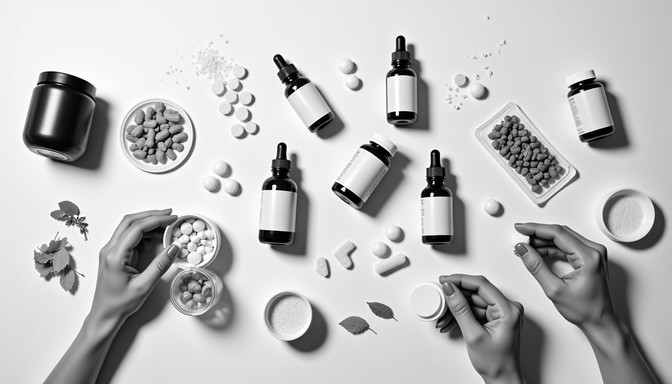
If you hang around fitness forums long enough, you'll see the same pattern. Someone asks what supplements they should buy, and the replies jump straight to creatine, pre-workout, fat burners, and a dozen powders with aggressive branding. The quieter truth is less exciting and more useful. Supplements sit at the end of the chain. Training quality, protein intake, calories, sleep, and consistency do almost all of the work. Anything in a tub is a small edge on top of that, or expensive noise if the basics aren't there yet.
Start with a hierarchy, not a shopping list.
🏋️ First: a program you can stick to, progressive overload, and enough recovery to come back stronger.
🍗 Second: enough total protein and calories for your goal, whether that's building muscle or losing fat.
😴 Third: sleep and stress management, because they affect hunger, training quality, and recovery more than most capsules ever will.
Only after those are roughly in place does supplementation become worth debating.
✅ A short list tends to earn its keep for most lifters.
💪 Creatine monohydrate is the boring classic: well studied, cheap, and useful for strength and muscle over time.
🥤 Protein powder is not magic. It's just convenient food when whole food protein is hard to hit.
☕ Caffeine can help training quality if you tolerate it and don't wreck your sleep with late doses.
Beyond that, many people look at vitamin D or fish oil only when diet and lifestyle leave an obvious gap, ideally checked with a clinician rather than guessed from an ad. Everything else should have to fight hard for a spot in your cart.
❌ What usually does not matter as much as the marketing claims: fat burners, testosterone boosters with flashy ingredient lists, proprietary pre-workout blends you can't evaluate, and "anabolic" powders that promise transformations without hard training. If a product's pitch depends on before and after photos and urgency rather than a clear, boring mechanism, treat it as entertainment spending, not a training tool. Also skip stacking ten things at once. You won't know what helped, and you'll burn money testing noise.
💡 A practical rule that works well on a budget: if you can't explain in one sentence why you're taking something, drop it. Prefer single ingredient products you can evaluate. Reassess every few months. If your training and diet improved and the supplement didn't change how you feel or perform, you don't need it. Tools like Hyprform help more with the bigger levers: a clear program, progressive sessions, and consistency. That's the stuff that makes any supplement decision matter less.
🎯 Bottom line: supplements are optional polish, not a foundation. Get the training and food right, sleep enough, then keep a short, boring stack if it helps you stay consistent. Ignore the rest of the aisle.